Finding the right kind of treatment for addiction isn’t a one-size-fits-all decision. What feels like the right fit for one person can feel impossible for another, and that’s because recovery is deeply personal. There are multiple ways to approach it, from structured inpatient care to flexible outpatient options, and each offers its own rhythm, challenges, and strengths. The real key is understanding how these models differ and what kind of environment you need to build momentum in your own recovery.
Inpatient Programs and the Power of Full Immersion
Inpatient rehab is often what people picture when they think of treatment. It’s the most immersive option, pulling you away from daily life so you can focus entirely on recovery. This can mean checking into a hospital-based unit or a residential facility where you live on-site for several weeks or even months. The benefit here is intensity. Everything is structured—meals, therapy, group sessions, activities. That structure can feel like both a safety net and a reset button, especially for people who’ve struggled with relapsing in an unstructured environment.
There’s also a sense of community in inpatient care. You’re surrounded by others working toward similar goals, and that can be motivating when you’re feeling worn out or discouraged. Still, the intensity and isolation from your normal life can be a challenge too. Not everyone can step away from work, family, or school responsibilities for an extended time. For those who can, though, inpatient treatment can be the launchpad they need to stabilize and start fresh.
Outpatient Care and Learning to Say Yes to Help
Outpatient treatment is often chosen by people who want structured care without leaving home for weeks at a time. It’s designed to let you live your life while committing to therapy and recovery work. You might attend counseling, group therapy, or skills training several times a week, then return home afterward. For some, that balance between treatment and daily responsibilities is empowering. It teaches you how to practice recovery skills in real time, with real stressors, instead of in the bubble of a facility.
The flip side is that outpatient care requires more self-discipline. There’s more temptation around, more pressure, and fewer physical barriers between you and old habits. That’s why outpatient programs often work best for people who already have a stable living situation and supportive environment. Whether it’s friends who’ll check in, family who’ll step up, or peers you trust, the ability to say yes to help can make all the difference in sticking with it. Outpatient rehab reminds you that asking for support isn’t weakness—it’s one of the strongest decisions you’ll make.
The Hybrid Approach of Partial Hospitalization and IOP
Somewhere in between inpatient and outpatient care sit partial hospitalization programs (PHPs) and intensive outpatient programs (IOPs). These are often seen as the middle ground—structured, but with more flexibility than living on-site full-time. You might spend most of your day in therapy and activities, then head home at night. Or you might attend several longer sessions a week, depending on your treatment plan.
What makes these options appealing is that they combine intensity with practicality. If you’re not in a place where you can vanish from your responsibilities for weeks, they allow you to keep a foot in your daily life while still devoting serious time to recovery. It also helps that treatment is tailored to your schedule and needs. Some people step down from inpatient into PHP or IOP as part of a continuum of care. Others start here if they need something more than weekly therapy but less than residential treatment.
It’s also where geography and personal preference come into play. Maybe you connect with the idea of a structured IOP but want it in a location that feels manageable, whether that’s an IOP near Draper UT, 12-step in Atlanta, GA or online therapy wherever you live. The right program is often less about a perfect formula and more about what feels realistic and motivating for you.
Therapy, Connection, and the Role of Mental Health
No matter what kind of rehab you choose, therapy is the backbone of the process. Cognitive behavioral therapy (CBT), dialectical behavior therapy (DBT), and trauma-focused approaches are common because addiction is rarely just about the substance itself. It’s tied to patterns of thinking, coping mechanisms, and often other mental health challenges. Treating one without the other usually doesn’t stick.
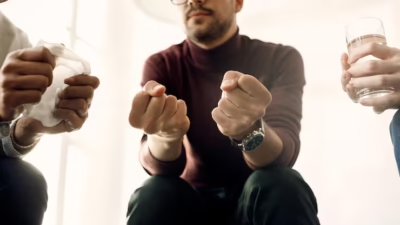
Therapy also digs into triggers—those moments, places, or emotions that spark cravings. Learning to recognize them and respond differently is what separates recovery from simple abstinence. Group therapy adds another layer, reminding you you’re not alone in those challenges. That connection can dissolve shame and replace it with accountability and encouragement.
Medication can sometimes be part of the equation too, particularly for alcohol or opioid use disorders. Medications like buprenorphine or naltrexone aren’t a shortcut, but they can be tools that reduce cravings or block effects while you focus on building a healthier foundation. When paired with therapy, they can make recovery more sustainable.
Community-Based Recovery and Peer Support
Formal rehab isn’t the only path. For many, community programs and peer-support models are where recovery takes root. Twelve-step groups like Alcoholics Anonymous or Narcotics Anonymous are the most recognizable, but there are also secular programs and peer-run groups built on different philosophies. These spaces often thrive on accessibility. Meetings happen daily, sometimes multiple times a day, in cities, towns, and online. That makes them easy to plug into and return to, even if you’ve left formal treatment.
Peer support works because it’s raw and honest. You’re talking to people who’ve lived it, not just studied it. There’s a camaraderie in that, a sense that no one’s grading you or waiting for you to prove yourself. For some, these groups serve as a long-term foundation after rehab. For others, they’re the main event, especially when cost or logistics make formal treatment harder to access.
What’s important here is that recovery doesn’t stop when you leave a facility or log out of therapy. It’s about building a life that supports your growth, with people who’ll keep walking with you through setbacks and wins alike.
Lifestyle Change and Long-Term Commitment
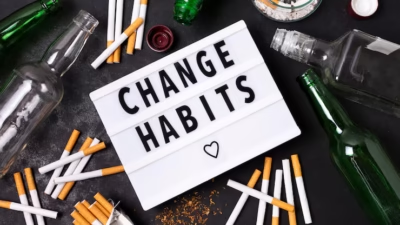
Rehab, in whatever form you choose, is the starting point. The real challenge—and reward—comes in sustaining recovery long term. That usually means reshaping your life in ways that extend beyond the program itself. Building new routines, cutting ties with environments that fuel old habits, and finding outlets that keep you grounded are all part of that journey.
Exercise, nutrition, creative outlets, and mindfulness practices often show up here. They’re not just add-ons; they’re reinforcements. When you’ve had a stressful day and your old reflex was to reach for a drink or use, having another habit in place can be the difference between relapse and resilience. Some people discover passions they’d never given themselves the chance to try before, and those discoveries become anchors that hold them steady.
Aftercare is another layer worth noting. Many programs offer ongoing support, whether that’s weekly alumni groups, periodic check-ins, or links to local resources. The purpose isn’t to keep you tethered but to make sure you don’t feel like you’re walking out alone when rehab ends. That continuity is often underestimated but deeply valuable.
Path Forward
The best type of rehab isn’t about picking the “right” option from a lineup—it’s about finding the one that matches your needs, circumstances, and willingness to engage with the process. Some people need the full reset of inpatient care. Others thrive when they can balance therapy with daily life through outpatient or IOP programs. For many, it’s a mix, shifting over time as recovery takes shape. What unites all of these options is the opportunity to build a foundation for lasting change. The specifics may look different, but the heart of it is the same: investing in yourself and your future.